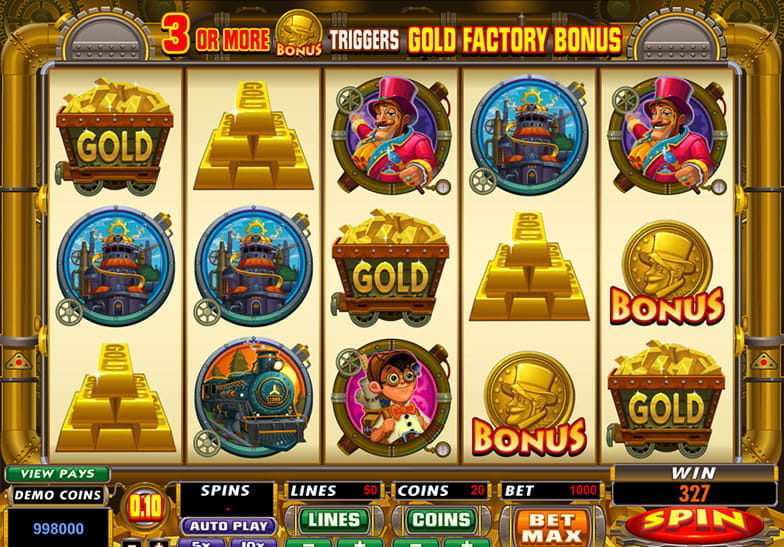
As we gamble at an online casino, we are essentially trusting a digital system to mirror the odds of a physical game https://sankrakazino.gr/. That trust is not anything we should offer lightly. Game fairness is not a vague pledge or a marketing slogan; it is a quantifiable, verifiable technical standard. It dictates whether the roulette wheel functions as it should, whether the slot reels halt at truly random positions, and whether the cards we are given come from a genuinely shuffled deck. Understanding how this works changes the way we choose where to play.
The manner in which Licensing and Regulation Ensure Fairness
A casino’s license is the legal framework that enforces all the technical standards we have discussed. Regulatory bodies like the Malta Gaming Authority, the Hellenic Gaming Commission, and the UK Gambling Commission do not just grant permits; they set ongoing obligations. To secure and keep a license, an operator must submit its games and RNG for independent testing, hold segregated player funds, and prove that its systems are secure against tampering. The regulator has the power to audit, fine, and revoke the license of any operator that fails to comply.
For players in Greece, the Hellenic Gaming Commission delivers a specific layer of local oversight. A license from this body indicates the operator has met the stringent requirements of Greek law, which includes game fairness, player protection, and responsible gambling measures. We should always confirm that a casino holds a valid license from a reputable jurisdiction. This information is typically presented at the bottom of the homepage. A genuine license number can be cross-referenced on the regulator’s official public register.
Regulation also dictates how disputes are managed. If we believe a game is malfunctioning or unfair, we have a formal route for complaint. The casino must have a clear system, and if we are not pleased with the resolution, we can bring the matter to the licensing body or an approved alternative dispute resolution service. This legal backstop is what gives the technical certifications their teeth. Without regulation, fairness is just a promise. With it, fairness is a legally enforceable standard.
Cryptographically Fair Technology in Crypto Games
A fresh category of fairness verification is provably fair technology, which is usually found in blockchain-based and crypto casino games. This system eradicates the need for blind trust in an auditor. Instead, it uses cryptographic hash functions to allow us to verify each game outcome independently. Before a round begins, the server produces a secret random seed and shares its encrypted hash with us. We also offer a client seed. After the round, the server reveals its original seed, and we can run both seeds through the algorithm to verify the result was predetermined and not altered.
The beauty of this system is that it moves the burden of proof. We do not need to trust the casino; we can verify the fairness ourselves using a straightforward online tool or a script. The casino cannot change the server seed after the fact because the hash was published beforehand. If the revealed seed does not match the hash, we understand the game was tampered with. This is a mathematically elegant solution that gives us complete control over the verification process. It is a significant step forward in player empowerment.
While provably fair technology is not yet common across all traditional online casino games, its principles are shaping the broader industry. It shows that fairness can be an active, participatory process rather than a passive certification. For players who are technically inclined, this level of transparency is highly reassuring. It removes the black box from the equation and replaces it with a verifiable mathematical truth. We anticipate to see these concepts continue to gain traction as the technology matures.
Live Game Honesty and Real Dealer Integrity
Live casino games bring a distinct dimension of fairness because they utilize physical equipment managed by human dealers. The RNG is supplanted by a real roulette wheel, a shoe of cards, or a set of dice. The fairness principle, however, remains the same. The equipment must be validated and the procedures must be open. High-definition cameras transmit every angle of the table, allowing us to view the dealer’s hands, the ball’s trajectory, and the card shuffle in real time. This visual transparency is a strong form of verification.
The integrity of a live game relies on strict operational protocols. Cards are changed frequently, and used decks are often discarded or shown to the camera before being removed. Roulette wheels are regularly balanced and tested for bias. The studios themselves are watched by pit bosses and compliance officers who supervise the dealers. Many live casino providers also utilize optical character recognition technology to rapidly read the cards or the winning number and transmit the data to our screen, erasing any possibility of manual input error.
We can also observe the dealer’s actions for any irregularities. The shuffle should be clear and thorough. The roulette ball must be rotated in the opposite direction of the wheel with sufficient force. These are small details, but they are part of the transparency that defines a fair live game. If we ever grow uncomfortable with a dealer’s handling of the game, we can simply leave the table. The best live casinos foster an environment where the physical reality of the game is the ultimate guarantee of its fairness.
How Random Number Generators Really Function
At the core of every digital casino game sits a piece of software termed a Random Number Generator, or RNG. This is far from a simple coin-flip script. A properly implemented RNG employs a complex algorithm fed by an unpredictable physical input, typically atmospheric noise or a hardware entropy source, to generate a sequence of numbers that has no discernible pattern. These numbers are created continuously, also when no one is playing. The moment we hit spin or deal, the RNG takes the current value and converts it into a game outcome.
The critical distinction we should recognize is between true randomness and pseudo-randomness. Casino RNGs are technically pseudo-random, but they are built to be indistinguishable from true randomness over billions of cycles. The algorithm must satisfy stringent statistical tests that check for uniform distribution, unpredictability, and a complete lack of serial correlation. If a slot has a 96% theoretical return to player, the RNG is the engine that guarantees that percentage plays out over millions of spins, rather than manipulating individual results but by defining the mathematical probability of each symbol combination.
Why does this concern to us as players? Because a game with a compromised or poorly designed RNG is no longer a game at all; it is a rigged simulation. A fair RNG guarantees that every spin, every card, and every dice roll is an independent event. The machine does not recognize we are on a losing streak, and it cannot determine to trigger a win. It simply performs a mathematical function, and the fairness resides in the integrity of that function and the randomness of its seed value.
Concrete Actions to Verify Fairness Before You Play
We can take a few specific actions before placing a single bet to ensure that a platform prioritizes fairness. First, scroll to the footer and search for the logos of testing laboratories. Follow them. They should lead to a live certificate that shows exactly which games were tested and when the certification runs out. If the seal is merely a picture with no link, or if the certificate is no longer valid, that is a cause for concern. A transparent operator makes this information easy to find and verify.
Second, examine the game information panel. Most well-known slots and table games have an in-game menu that shows the theoretical RTP for that particular title. We can contrast this figure against the game developer’s published specifications. A difference here is a major issue. Third, review the terms and conditions regarding bonuses and withdrawals. Unfairness often is concealed not in the games themselves but in exploitative terms that make it impossible to withdraw winnings. A honest casino combines fair games with fair, achievable wagering requirements.
Finally, we can test the platform with a small deposit and a withdrawal. The swiftness and simplicity with which we can access our funds is a direct indication of the operator’s trustworthiness. A casino that delays payments without reason or requests excessive documentation is not operating in good faith, irrespective of its game certifications. Payment methods like bank transfers, cards, and e-wallets should have explicit processing times. By integrating technical verification with practical testing, we build a complete picture of what it truly signifies for a casino to be fair.
The purpose of Autonomous Verification Laboratories

We do not inspect the source code of a casino game ourselves, so we depend on a system of authorized third-party auditors. These are autonomous testing laboratories that are experts in certifying gaming software. Organizations like eCOGRA, iTech Labs, and Gaming Laboratories International are the most well-known names in this field. Their job is to run the RNG through millions of simulated game rounds and contrast the results against the published theoretical probabilities. They do not only check the RNG; they also verify that the game logic accurately translates the random number into the shown outcome.
The testing process is comprehensive. Auditors analyze the source code to ensure there are no undisclosed functions that could change the payout rate based on player behavior, bet size, or account balance. They test the game in a separate setting and then test it again within the live server environment. They also evaluate the return to player calculations to confirm that the promoted percentage matches the mathematical model. A game that advertises 97% RTP must demonstrate that exact return over a representative sample of billions of rounds.

Once a game is approved, the laboratory grants a certificate of compliance. This certificate is typically placed in the footer of the casino website, and clicking it should take us directly to the auditor’s report. We should always look for a up-to-date, authentic seal from a reputable lab. An expired certificate or a seal that is just a static image without a link is a red flag. This independent verification is the single concrete proof we have that the games are not tampered with, and it is the basis of a dependable platform.
Player Return and Casino Advantage Explained
Player Return, or RTP, is a figure that shows how much of the total money staked on a game is returned to players over time. If a slot has an RTP of 96%, it indicates that for every 100 euros wagered, the game is designed to return 96 euros in winnings. The remaining 4 euros constitute the house edge, which is the casino’s mathematical advantage. This is not a cost we pay per spin; it is a long-term statistical average. In a single session, we can win far more than we wagered or lose our entire bankroll.
Different game categories have vastly different RTP ranges. Table games typically deliver the best returns. Blackjack played with perfect basic strategy can have an RTP above 99.5%, meaning the house edge is less than half a percent. European roulette, with its single zero, has a house edge of 2.7%, giving it an RTP of 97.3%. Slots vary more widely, usually spanning from 94% to 98%. Understanding these numbers helps us make informed decisions about which games align with our personal tolerance for risk and our preferred style of play.
We should also be cognizant of the difference between theoretical RTP and actual results. The RTP is a mathematical model that plays out over millions of rounds. In the short term, variance takes over. A high-volatility slot with a 96% RTP can drain a bankroll quickly before delivering a large win, while a low-volatility game with the same RTP produces smaller, more frequent payouts. The house edge is always working, but it works silently in the background. Knowing this stops us from falling into the trap of believing a game is due for a win.